IT
Robots That Judge for Themselves: Where Korea's Physical AI Is Heading

A four-legged robot trots from one corner of a room to another. It pauses, looks around, and then continues on its own without a human guiding every move. This is physical AI in action: a machine that does not simply move but senses its surroundings, understands what is happening and decides how to respond. The autonomous quadruped is built for practical work such as indoor security patrols and inventory checks, outdoor surveillance, stocktaking and monitoring industrial processes.
Its humanoid counterpart is designed to support operations at events and exhibitions, giving public spaces a more human-like presence. Korean company Maum AI has combined its own AI models with on-device computing. The company says the United States and China have huge domestic markets, enormous capital and strong industrial influence, which makes competing on those terms difficult, so Korea should leverage its strong manufacturing base.
Experts say building physical AI takes more than AI alone. It requires the ability to develop powerful models, the semiconductor technology to run them and real-world industries where the innovations can be put to work. The transition is expected to come gradually, starting with industries where the technology can be applied today.
President Lee Calls for a Cyber Security Czar After Binance Heist
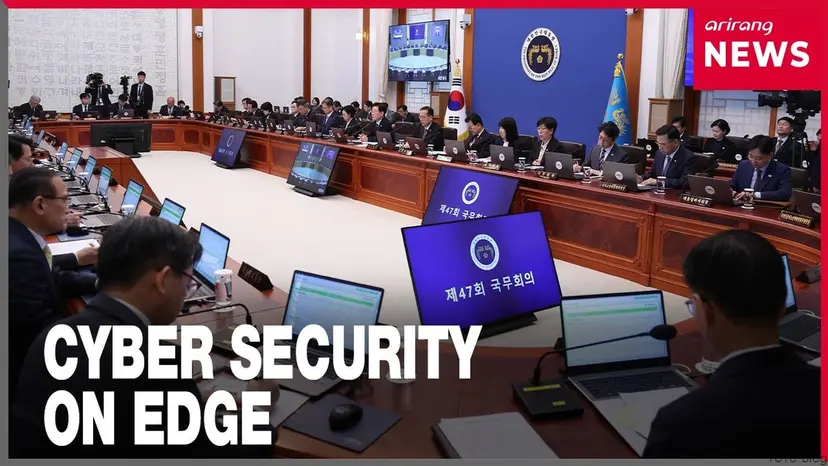
President Lee Jae Myung has called for a full overhaul of South Korea's cyber security framework, citing the world's largest cryptocurrency heist and warning that the damage goes beyond individuals to national security and the economy.
At Tuesday's Cabinet meeting, he said advances in artificial intelligence have made hacking techniques increasingly clever, sophisticated and common, and that existing systems built around inspection and response are clearly revealing their limits. He called for a comprehensive security system covering both the public and private sectors, and asked officials to actively consider a strong and effective cyber security czar that can coordinate scattered security functions.
He also instructed them to build a system that detects signs of attacks in advance and to fundamentally overhaul security, with particular emphasis on national infrastructure such as key public services, information and communications, and energy. The FBI has accused North Korea of stealing more than six billion dollars in digital currency from Binance, and Pyongyang has denied involvement and protested strongly.
Ten Years of the Suh Kyungbae Foundation: Giving Basic Science Time

The Suh Kyungbae Foundation, known for supporting rising researchers in basic science, marks its 10th anniversary this year. Because outcomes in basic science take a long time to appear, the foundation has dedicated itself to giving young scientists time and resources.
The foundation was set up to create a research-friendly environment for young scientists by investing private funds. Dedicating time and effort to a single assignment can be difficult for scientists working with public research grants, so the foundation guarantees them enough time to continue the projects they want to pursue. Over the past decade it has invested more than 90 billion won, about 65.7 million dollars, in some 30 rising scientists, and from this year it plans to allocate roughly five billion won per person over a maximum of 12 years.
The foundation argues that digging into one assignment for a decade or more opens new paths, and that an investment which embraces young scientists' failures and dedication is what gives them the time and resources to finish their work.
Politics
Record 821 Trillion Won Budget Bill Enters Review Amid Partisan Clash
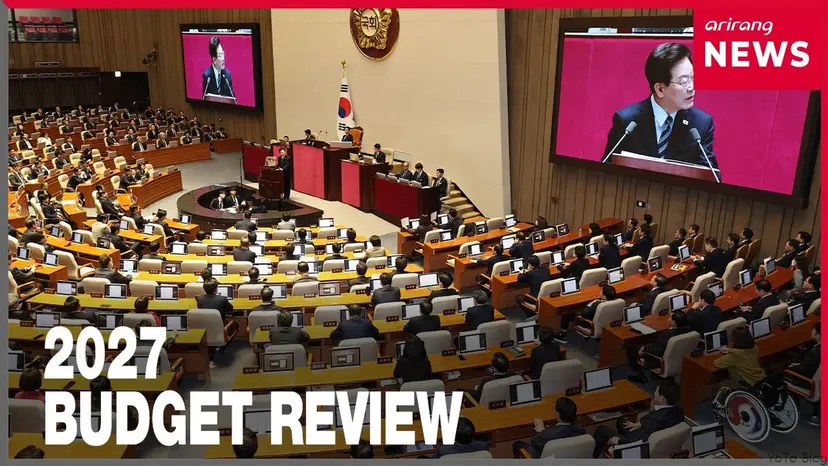
The National Assembly has begun work on next year's record budget of 820.9 trillion won, about 612 billion dollars. The government says the plan shifts from growth concentrated in a handful of companies, regions and social groups to growth shared by everyone, and the bill is 12.8 percent larger than this year's initial budget.
Stronger semiconductor exports generated additional tax revenue and gave the government room to invest. At the center is a 162.3 trillion won Future Response Fund covering four priorities: young people, future industries, regional development, and education and talent, with 45.4 trillion won allocated to them. Another 12.5 trillion won is meant to reduce new bond issuance, while 104.4 trillion won is held in reserve for tax revenue shortfalls or urgent policy needs. Some 21.3 trillion won is proposed for three mega projects in semiconductors, physical AI and AI data centers, and defense spending rises 8.2 percent to 73.3 trillion won.
The ruling Democratic Party backs investment in future industries and household support. The main opposition People Power Party says the budget is too large, has called for at least 30 trillion won in cuts across 100 programs and wants the reserve used to repay debt. Review begins Wednesday with a general policy hearing and moves to detailed adjustments on November 16, and although both parties say they will meet the December 2 deadline, disagreement over the fund is likely to make talks difficult.
UN Security Council Publishes Seoul's Letter on DMZ Landmine Blast
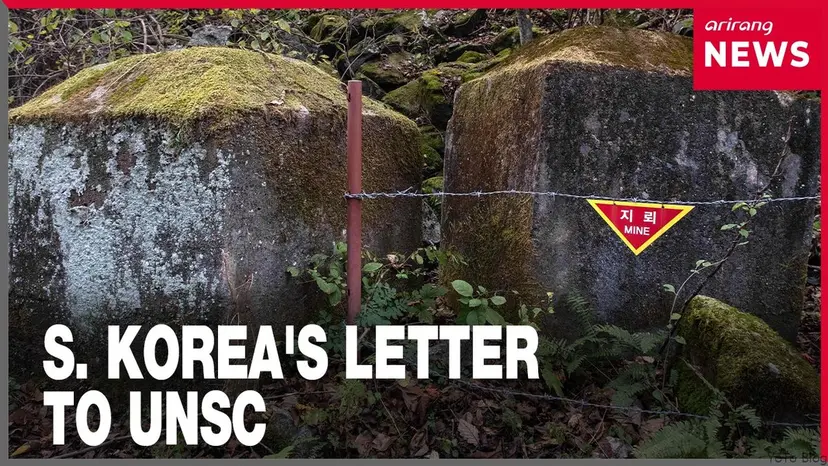
The United Nations Security Council has made public a letter South Korea sent to its president on October 22 about last month's landmine explosion near the inter-Korean border, which injured three South Korean soldiers. The letter sought to draw the council's attention to the blast at the DMZ on September 21.
In the letter, Seoul called on North Korea to take responsible measures and engage in dialogue to prevent further escalation and restore trust. Citing a joint investigation by South Korea's Joint Chiefs of Staff and the UN Command on October 5 and forensic analysis by the National Forensic Service, the government said the blast was caused by an anti-personnel landmine planted by the North. It also argued that Pyongyang's border fortification work violates the Korean War Armistice Agreement.
The letter underscored the legitimacy of South Korea's military response, describing loudspeaker broadcasts and warning shots as lawful defensive measures meant to stop North Korean troops from crossing the MDL and to ensure their withdrawal. The move is seen as a preemptive answer to repeated North Korean claims that the warning shots were provocations violating Article 2, Paragraph 4 of the UN Charter. Seoul did not request any specific council action such as a meeting or a statement.
North Korea Claims Cluster Warhead Test for Cruise Missile

North Korea said Monday it had tested a cluster warhead designed for strategic cruise missiles and claimed it has perfected vertical strike capabilities. The announcement through state media came two days after a similar test involving a tactical ballistic missile on Saturday.
South Korea's military responded that it had already developed and deployed precision-strike capabilities surpassing those claimed by the North about two decades ago, and said details of its weapons systems remain classified for strategic reasons.
Economy
October Consumer Prices Rise 2.8 Percent, Staying Below 3 Percent

Consumer inflation in Korea eased to 2.8 percent in October from 2.9 percent in September, staying in the two percent range for a second straight month. Falling agricultural, livestock and fishery prices pulled headline inflation down, while processed food and dining-out costs rose faster.
Processed food prices climbed 2.9 percent, up from 2.1 percent in September and the fastest pace in 11 months, with instant food alone jumping 12.4 percent. Dining-out prices rose 2.9 percent, the steepest increase since February, and petroleum products gained 14.9 percent, the sharpest rise since July. The finance ministry estimates that its fuel price cap held headline inflation down by about 0.8 percentage points.
Ahead of kimchi-making season the government unveiled its largest-ever support package, worth 64 billion won, discounting key ingredients such as napa cabbage and garlic by up to 40 percent and seafood such as salted shrimp by up to 50 percent. The Bank of Korea expects inflation to stay in the high two percent range in November given strong core price growth.
Korea and Türkiye Sign Nuclear Financing MOU, Eye 15 Billion Dollar Trade Goal
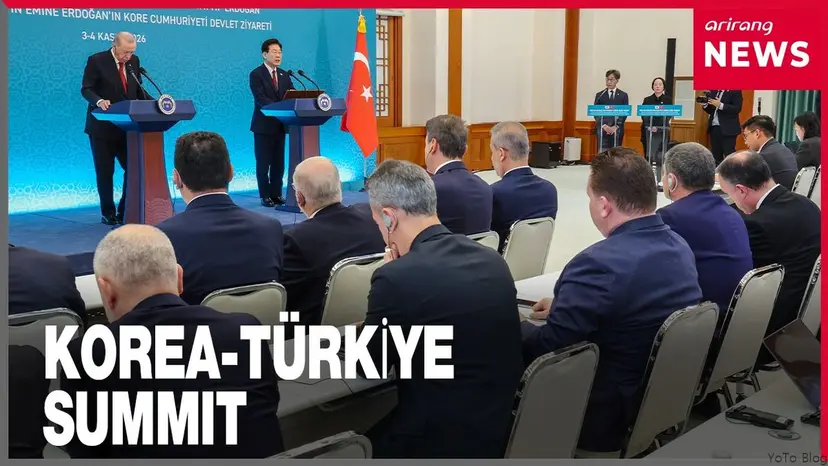
President Lee Jae Myung and Turkish President Recep Tayyip Erdoğan held a summit at the Blue House on Tuesday and agreed to strengthen their strategic partnership in areas including nuclear power and trade. Erdoğan is on a three-day state visit, and his welcoming ceremony featured a taekwondo demonstration, the first of its kind at an official event.
The centerpiece was Türkiye's planned nuclear plant in Sinop. After signing a nuclear cooperation agreement last November, the two sides have conducted site assessments and feasibility work together, and on Tuesday they signed an MOU on nuclear project financing to support Korean companies' participation. In an interview with Yonhap before the summit, Erdoğan called Korea a strong potential partner for Sinop but said Ankara is weighing other countries' offers based on its national interests.
The leaders also agreed to address trade imbalances, import restrictions and customs delays. Bilateral trade has grown since their free trade agreement took effect in 2013 and reached a record of about 11 billion dollars last year, and the two sides discussed how to reach their 15 billion dollar target in a balanced way. Türkiye exported about 1.1 billion dollars worth of goods to Korea in 2025 while importing more than 10 billion dollars. Three more MOUs were signed on natural resources and mining, energy, and science and technology.
Foreign Tourists Spend 6.1 Billion Dollars in Seoul in Nine Months
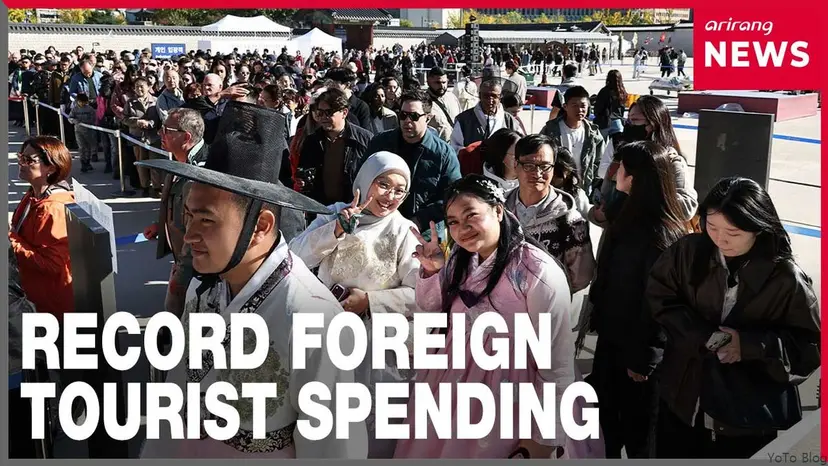
Foreign tourists' card spending in Seoul topped 6.1 billion dollars in the first nine months of this year, already surpassing last year's full-year total. According to the Seoul Metropolitan Government, spending rose nearly 58 percent from a year earlier and exceeded the 2025 annual figure by more than 11 percent.
Shopping accounted for 46 percent of the total, followed by medical and wellness services at about 24 percent. Gangnam and Jung-gu remained the top spending districts, while spending in Seongdong-gu more than doubled.
Seoul also welcomed a record 13.1 million foreign visitors in the January to September period, up more than 21 percent from a year earlier. The city expects annual spending to climb further if the trend continues through the year-end shopping season.
Society
Police Probe Presidential Trip Data Leak as Public Sector Security Checks Expand

South Korean police have opened a formal investigation into the online exposure of personal information belonging to 168 people, including President Lee Jae Myung and First Lady Kim Hea Kyung. The leaked file was a passenger list from the president's June trip to Europe and contained the names, dates of birth and passport numbers of government officials, security personnel and accompanying journalists.
The information was reportedly uploaded to a security-related website on June 2 and remained accessible for nearly five months. The site lets users scan files and links for malicious software, but paying members can download files uploaded there, and police suspect the list was posted while it was being checked for malicious code.
The Foreign Ministry said it had removed the information from the site and was checking for further leaks, and that it is moving quickly to reissue passports for everyone affected, including the president and first lady. It said it was leaning toward an information leak rather than a cyberattack. Separately, after a series of hacking incidents targeting financial institutions, the National Intelligence Service asked about 2,100 public institutions, including central and local government agencies, to conduct emergency security checks, with inspections due to wrap up by mid-November.
Cheongwadae Sarangchae Draws Overseas Visitors With Photo Booth and Exhibitions
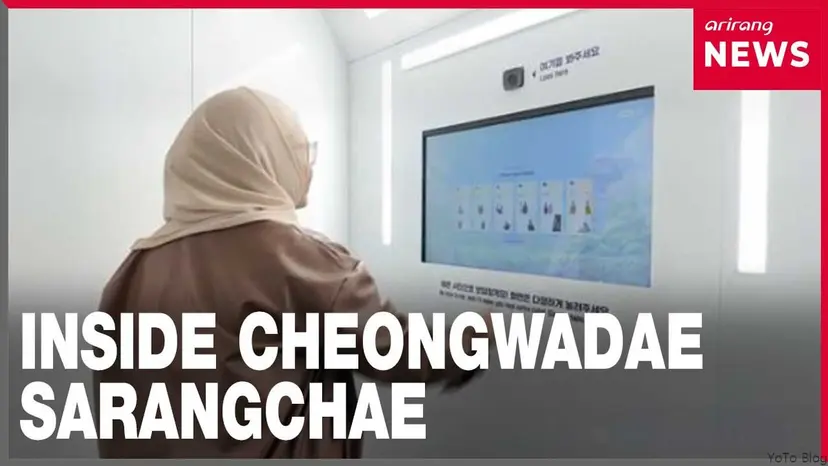
Cheongwadae Sarangchae, just steps from the Blue House, has become an open cultural space built around the idea of a travel library, offering passersby a place to rest and foreign tourists a glimpse of Korean culture.
In one corner, a photo booth called Jamp 4 Cut lets visitors pose alongside President Lee Jae Myung and First Lady Kim Hea Kyung. It was introduced for a limited time to mark the administration's first anniversary and became permanent last Wednesday. Visitors can choose from six photo frames, decorate their pictures with stickers depicting 12 Korean cultural heritage items and save them to their smartphones by QR code.
Special exhibitions on the presidency and Korean culture are on display alongside a library, cafe and souvenir shop. The Blue House says the programs are part of efforts to bring the presidency closer to the public while introducing international visitors to Korean culture.
Houses Built Like Stairs: Seventy Years of Gamcheon Culture Village

Gamcheon Culture Village, a hillside neighborhood in Busan, was built on one rule: never block a neighbor's sunlight or view. The houses climb the slope like steps, each row set back from the one below.
Today the village is famous for its colors, drawing more than two million visitors a year, but the paint is only the surface. In 2009 a government-backed art project called Busan's Machu Picchu of Dreams brought artists who turned empty lots and bare walls into works of art, and Gamcheon soon gained nationwide recognition.
Beneath the paint lies concrete. By the 1980s many homes had flat concrete roofs, and in the 1960s they were low houses topped with slate. During the Korean War refugees flooded into Busan, and in 1955 the city cleared a downtown shantytown, sending thousands of members of a religious community called Taegukdo together to this hillside. Their leader divided the land and laid down two rules: connect homes with narrow alleys, and make sure no house blocks the sunlight or view of the one behind. Seventy years later the shacks are concrete homes and gray has given way to color, but the stepped layout and winding alleys largely remain.
World
Americans Vote in Midterms as Democrats Eye the House

Americans are voting in midterm elections that will decide control of Congress and shape the final two years of President Donald Trump's term. All 435 House seats, 35 Senate seats and 36 governorships are up for grabs.
The vote is widely seen as a referendum on Trump's leadership. Forecasters suggest Democrats are well positioned to retake the House, while the Senate battle remains highly competitive: Republicans hold a 53 to 47 majority, so Democrats need a net gain of four seats. Maine, Michigan, Ohio, Iowa, Kansas, Texas and Alaska are among the key battlegrounds.
More than 56 million Americans had reportedly cast mail-in or in-person ballots by Monday, and an analysis commissioned by CNN and the Associated Press found that registered Democrats made up a share of early voters 13 percentage points higher than Republicans across 25 states. Analysts caution that early voting does not predict outcomes. Trump has said he would consider preemptive pardons for Elon Musk and other allies to shield them from potential investigations if Democrats win Congress.
Russian Strike on Ukraine Aid Center Kills at Least 26
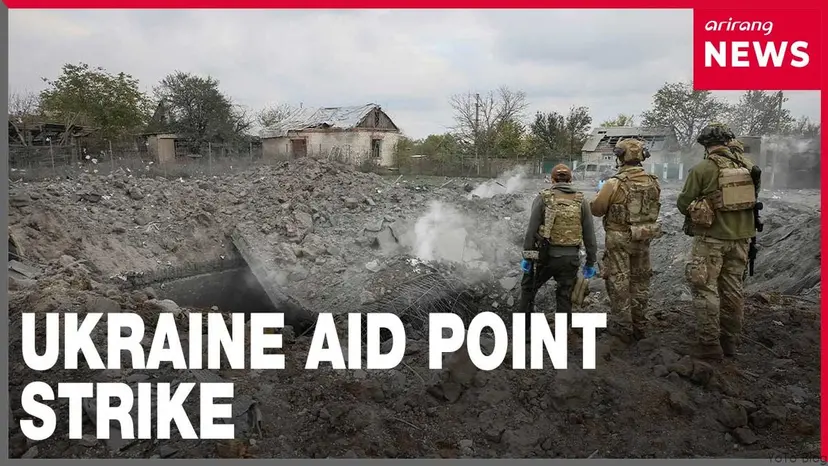
A Russian bombing of a school used to hand out aid in Ukraine has killed at least 26 people. Officials said Monday that two rescue workers and four police officers were among the dead in the village of Komyshuvakha in the Zaporizhzhia region.
President Volodymyr Zelenskiy said Russian forces dropped bombs as residents arrived for aid and then struck the shelter. The attack came a day after a six-day local ceasefire ended in the city of Oleshky.
U.S. Strikes Iran's Qeshm Island Ahead of Midterms

The United States struck Qeshm Island in the Strait of Hormuz on Monday, a day before the midterm elections. The Wall Street Journal reported the strike, citing U.S. officials who said Washington had also carried out several limited attacks on Iran in recent weeks.
CNN said a U.S. official described the attack as a defensive measure to protect U.S. assets from Iranian attacks on the strait. Iranian state media confirmed several explosions, but U.S. Central Command did not comment.
The strike came as President Donald Trump told reporters he had no plans to strike Iran after the November 3 midterms.
Culture
A2O LITE Take Eight Music Show Wins as J-Hope and BIGBANG Set Records

Rookie group A2O LITE have collected eight music show wins with their debut single NEON. They took first place on SBS's Inkigayo last Sunday for a second consecutive win on the program, a day after earning their first-ever trophy on MBC's Show! Music Core. Their live performances, including a duo dance routine by members AIJING and XILI, synchronized choreography and an energetic dance break, have drawn particular attention.
NEON has held the top spot on Melon's Top 100 for 18 consecutive days and entered the top 10 of Billboard's Global 200 and Global Excl. U.S. charts, while also topping Oricon's weekly ranking of songs with the biggest streaming gains in Japan.
BTS member J-Hope's music video for MONA LISA surpassed 100 million YouTube views on the morning of October 31, more than a year after the song's March 2025 release. It is his fourth video to reach the milestone, following Daydream, Chicken Noodle Soup and Killin' It Girl. BIGBANG became the first K-pop act to hold a solo concert at Sydney's Accor Stadium, performing there on October 31 as part of their XX : COSMOS tour, their first show in Sydney in 11 years, and thanked fans as the group marks its 20th anniversary.
Music in the Greenhouse by Day, Media Art by Night at Changgyeonggung

Changgyeonggung Palace in central Seoul is offering visitors a special way to experience autumn. By day, melodies fill its century-old greenhouse, and at night the grounds come alive with media art.
The Changgyeonggung Grand Greenhouse, built in 1909, is Korea's first Victorian-style conservatory. At the morning Changgyeonggung Greenhouse Concert: Fragrance and Melody, a gayageum and viola duo performed the familiar Korean song Arirang while visitors took in the scent of cedarwood.
From 7 to 9 p.m. the Moonlight Lotus program turns the palace into a canvas, with lights and visuals complementing the scenery around Chundangji Pond to depict the palace's history. The display is spread across eight scenes throughout the grounds, and QR codes at each scene provide information for self-guided tours.
North Korea Nears UNESCO Recognition for Taekwondo as Joint Bid Fades

North Korea is expected to move closer to securing UNESCO recognition for taekwondo as an intangible cultural heritage, making a joint inscription with South Korea increasingly unlikely. Huh Min, head of the Korea Heritage Service, said Monday that the North's nomination is expected to receive a recommendation from UNESCO's evaluation body, citing strained inter-Korean relations as a major obstacle to joint recognition.
He stressed that an inscription would not give Pyongyang exclusive rights to the martial art and that Seoul would continue pursuing recognition through a separate inscription. The final decision is expected in December at the 21st session of UNESCO's Intergovernmental Committee for the Safeguarding of the Intangible Cultural Heritage in Xiamen, China.
Separately, First Vice Culture Minister Kim Young-soo met his Vietnamese counterpart Nguyen Huy Dung on Monday and agreed to strengthen cooperation in the cultural industries. Seoul pledged support for a high-level APEC dialogue to be held in Vietnam next year, thanked Vietnam for cooperating on Korean content copyrights and called for joint efforts to prevent piracy.