IT
KAIST develops artificial fingerprint that verifies items with two kinds of light
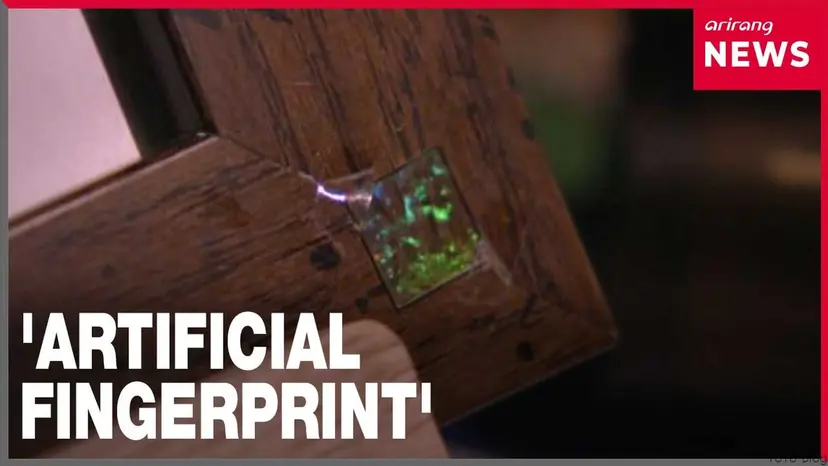
A research team at KAIST has developed an authentication technology that uses two different kinds of light to verify an item's authenticity with nothing more than a flashlight and a laser pointer.
When dropped onto water, nano-sized particles assemble themselves into a random pattern that serves as an artificial fingerprint. White light from a flashlight reveals different colors and designs depending on how the particles are arranged, while a green laser scatters in several directions to produce a completely different pattern. Combining the two optical responses creates a dual-authentication check.
Once a scanned pattern is stored, verification no longer requires an expensive microscope. The researchers also attached the micro-patterns to flexible plastics, metals, transparent films and soft gels, and the results were published in the journal Nature Communications.
Financial authorities tighten security measures after wave of data leaks
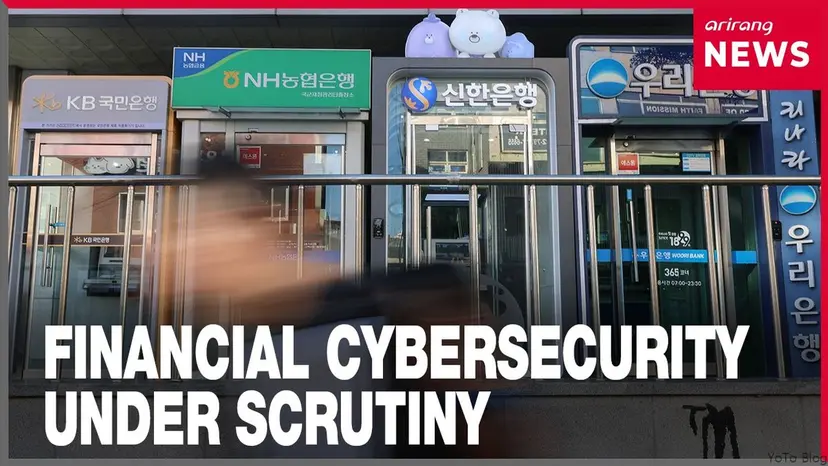
Financial authorities are tightening digital defenses after a wave of cyberattacks exposed serious vulnerabilities across the financial industry. The Financial Services Commission met industry leaders on Thursday, with chairman Lee Eog-weon warning that threats are becoming more sophisticated and urging institutions to act urgently.
As of Tuesday, 37 financial firms had reported 40 cyber incidents since the first breach was detected on September 30. Banks, securities firms, insurers, electronic finance companies and cryptocurrency operators were affected. About 473,000 personal records were leaked and roughly 1 billion won, or some 745,000 dollars, was stolen, mainly from smaller crypto and electronic finance firms. Authorities say no direct losses to individual customers have been confirmed.
Comprehensive security checks will cover about 580 financial firms by the end of the year, with large firms reviewed twice a year and smaller ones receiving AI-based support. CEOs could be held accountable for serious failures, and new legislation is planned for early next year to extend security rules to crypto firms and third-party providers.
Cyberattack hits French blood bank fridges
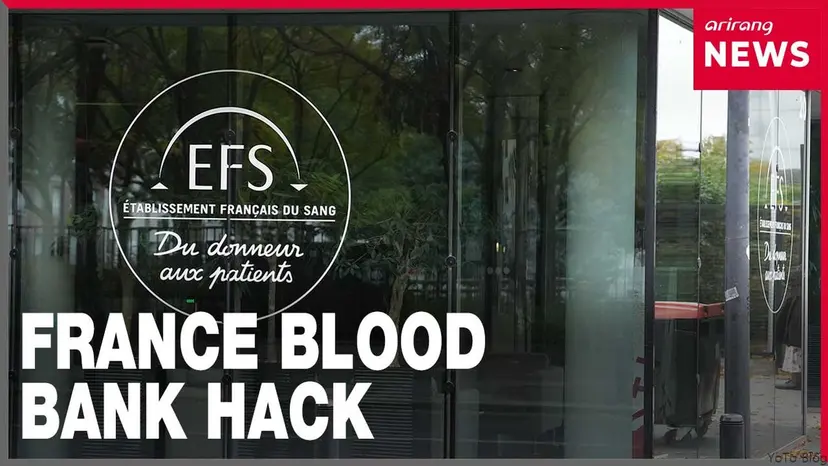
A cyberattack in France targeted refrigerators at three regional blood banks overnight between Sunday and Monday. Staff were alerted and moved the blood to fridges that were not connected to the network, and officials said supplies were not affected.
The French health ministry said Wednesday that the situation was under control and that remote access to the fridges had been disabled. On the same night, hackers tampered with refrigerators at supermarkets in eight European countries.
Politics
Special counsel bill sparks fresh clash in the National Assembly

The National Assembly tabled a contested special counsel bill on Thursday after bipartisan talks collapsed earlier in the day.
The ruling Democratic Party says the measure is meant to investigate alleged politically motivated prosecutions under former President Yoon Suk Yeol, and it dropped a clause that would have let the counsel cancel indictments.
The opposition People Power Party called the bill a parliamentary coup, arguing it could lead to charges against President Lee Jae Myung being dropped, and launched a filibuster.
President Lee hosts WorldSkills team for lunch at Blue House

President Lee Jae Myung hosted a luncheon at the Blue House on Thursday to congratulate the national team that finished second at this year's WorldSkills Competition in Shanghai in September.
In his opening remarks, he credited skilled workers with building Korea's standing as a global manufacturing powerhouse. Calling young technicians the future of the country, he pledged to ensure that people with outstanding skills receive the recognition and respect they deserve.
Held every two years, WorldSkills is the world's largest vocational skills competition, with young people competing in fields such as manufacturing, engineering and construction.
Government postpones cryptocurrency gains tax to 2029

The government has decided to delay its tax on cryptocurrency gains by another two years, to 2029, the fourth postponement since the law was introduced in 2020. It said Thursday that it will consult the National Assembly on the delay.
Officials cited tax fairness for domestic investors, since cross-border crypto data-sharing with the United States will not begin until 2029, and the need to reflect new trading methods such as staking.
Given high market volatility, the government also plans to allow a three-year loss carryover instead of imposing the current 22 percent tax on annual gains above 2.5 million won, or roughly 1,870 dollars.
Economy
September current account surplus tops 60 billion dollars for the first time

Korea's current account surplus topped 60 billion dollars for the first time in September. The Bank of Korea said Thursday that the surplus reached 61.46 billion dollars, more than four times the figure a year earlier and above the previous record set in June. The monthly surplus had hovered between roughly 28 billion and 50 billion dollars since March.
The goods account led the gain with a record surplus of 62.75 billion dollars, more than offsetting a 3.35 billion dollar deficit in services. Exports rose 92.4 percent from a year earlier to 130.72 billion dollars, staying above 100 billion dollars for a fourth straight month, while imports grew 29.4 percent.
Semiconductors drove the improvement. Customs data showed chip exports jumped 260.3 percent to 60.5 billion dollars on continued global investment in AI servers, with shipments to the United States, China and Southeast Asia all more than doubling. Chip prices rose 182.1 percent while volume increased about 30.5 percent. The surplus for the first nine months totaled 340.66 billion dollars, and the central bank expects the full-year figure to reach its August projection of 450 billion dollars.
Global investment banks raise Korea growth forecasts to 3.7 percent

Major global investment banks are raising their growth forecasts for Korea. According to the Korea Center for International Finance, eight such banks have lifted their average outlook for this year to 3.7 percent, marking seven consecutive months of upgrades since April.
The revision appears to reflect stronger-than-expected third-quarter growth. Preliminary Bank of Korea data showed the economy expanded 1 percent on quarter, well above the market consensus of 0.3 percent. With chip exports expected to keep their momentum, the banks also raised their outlook for next year to an average of 2.9 percent.
Sell-sidecar activated on KOSPI as chipmakers slump
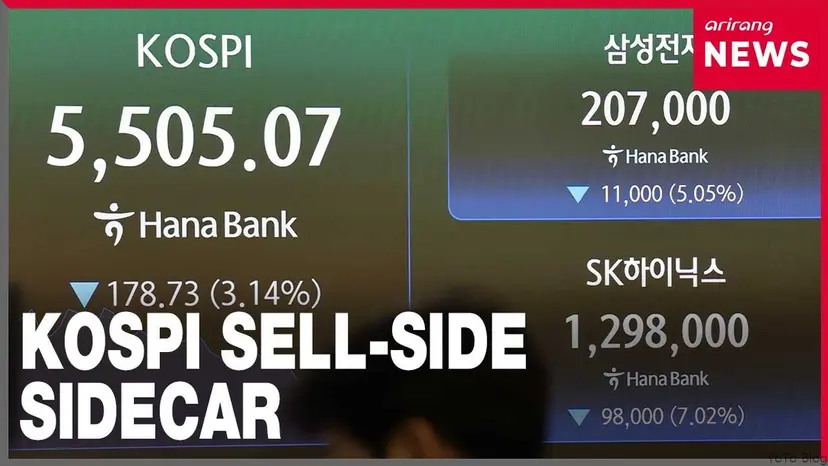
A sell-sidecar was triggered on the KOSPI on Thursday morning as the benchmark index extended its losses, temporarily halting program sell orders. The Korea Exchange activated the curb at 10:16 a.m. after KOSPI 200 futures plunged 5.2 percent. It was the first such activation on the KOSPI since October 30.
The KOSPI opened 1.82 percent lower at around 5,580 points and then deepened its losses to more than 4 percent in morning trade. The sell-off was driven by steep declines in major chipmakers including Samsung Electronics and SK hynix, amid concerns that a Democratic sweep in the U.S. midterms could lead to tighter regulation of artificial intelligence.
Society
Seoul unveils World Youth Day 2027 plans, expects 500,000 participants

Organizers of World Youth Day 2027 have unveiled detailed plans for the Catholic gathering in Seoul next summer. The event will run for six days from August 3 to 8 and will be the first edition held in a country where Christians are not the majority.
At a press conference in Seoul on Thursday, organizers said they expect about 500,000 registered participants, including 400,000 from 190 countries. The opening Mass will be held at Seoul World Cup Stadium on August 3, and two days later the stadium will host a welcoming ceremony for Pope Leo XIV, making his first visit to Korea since becoming pope. The overnight vigil and closing Mass will take place at Seoul Air Base on August 7 and 8, with up to one million people expected at the final Mass.
With large crowds expected in midsummer, organizers said safety is the top priority and that they are working with police, firefighters and medical teams, while preparing shaded areas, cooling stations and drinking water. Before the main event, young pilgrims will take part in cultural and community programs in 15 Catholic dioceses across the country. Research estimates the event could generate between 2.07 trillion and 3.15 trillion won in economic output and support more than 11,000 jobs.
Korean kidswear goes viral at Seoul's Namdaemun Market

Namdaemun Market, Korea's largest traditional market for more than six centuries, is seeing a boom in children's clothing. With more than 10,000 shops packed into maze-like alleys, the market is drawing shoppers with affordable prices and a wide range of designs, helped by a recent uptick in the birth rate and a growing influx of foreign tourists.
Local officials say the market attracts about 30,000 foreign visitors a day. Some stores are so busy that shoppers need numbered tickets, and overseas customers show vendors photos and videos of trending styles. Some vendors also sell at wholesale prices to overseas retailers and are expanding into livestream shopping.
According to the Korea Customs Service, infant clothing exports more than doubled from 5 million dollars in 2023 to 12.2 million dollars last year and reached 9.3 million dollars in the first nine months of 2026. Vacancy rates for children's clothing stores in the market have fallen to around 15 percent.
Autumn gizzard shad at its richest

In Korea, there is a saying that autumn gizzard shad, known as jeoneo, is so delicious that a daughter-in-law who ran away over household chores would come right back. The fish spawns along the coast from spring to early summer, expending much of its energy developing gonads, then feeds heavily to recover, which leaves it rich in fat by autumn.
That accumulated fat gives the fish its distinctive rich flavor. Gizzard shad is also rich in protein, essential amino acids and omega-3 fatty acids, which are good for children and adults alike and help maintain cardiovascular health.
World
Democrats projected to win Senate and House in U.S. midterm elections

Democrats have won control of both chambers of Congress in a sweeping midterm victory. In the House, they passed the 218-seat threshold for a majority, winning districts across battleground states. With 384 of 435 seats counted as of 8 a.m. Korea time, the BBC estimated 237 Democratic seats and 147 Republican seats.
Democrats also flipped the Senate, taking at least 54 seats after gaining seven, while Republicans held 44. The count was based on 33 of the 35 seats up for election, with Mississippi and Alaska still to be called.
President Donald Trump told reporters at the White House on Wednesday that it was largely true the war with Iran was to blame, saying it drove gasoline prices up in the short term, but added he would make the same decision again because Iran cannot be allowed to have a nuclear weapon. Vice President JD Vance wrote on social media that the war and anxiety over the cost of living were direct causes of the defeat. Exit polls showed Latino voters, a key swing group that backed Trump in 2024, turning away from the Republicans. With both chambers in Democratic hands, the administration faces legislative gridlock for the rest of Trump's term.
Iran's Khamenei warns U.S. hostility will not end with midterm results

Iran's Supreme Leader Mojtaba Khamenei has warned that the U.S. midterm results will not change Washington's hostile stance toward Tehran. In a written statement published Wednesday, he dismissed suggestions that the Democratic victory in both chambers would soften American policy.
He said those who believe political change in Washington or concessions to the United States could end American hostility are seriously mistaken. Khamenei also claimed that Iran's control of the Strait of Hormuz had shattered what he called the myth of America's invincibility, and warned that renewed U.S. strikes would trigger a much broader conflict.
The statement came on the anniversary of the 1979 seizure of the U.S. Embassy in Tehran. Khamenei has not appeared publicly since his father and predecessor, Ali Khamenei, was killed in a U.S.-Israeli attack in February. Parliament speaker and chief negotiator Mohammad Bagher Qalibaf said on social media that Americans had voted against war.
North Korea tests new air defense missile and holds cruise missile drills

North Korea says it has test-fired a new air defense missile and staged long-range cruise missile drills. The Korean Central News Agency reported Thursday that the Missile General Bureau conducted a test to verify the technical specifications and performance of the new anti-aircraft missile system, guided by Kim Jong-sik, first vice department director of the Workers' Party Central Committee.
According to state media, the test checked the reliability of new flight vehicle materials, an enhanced guidance system, target identification and tracking capabilities and a detection information processing device. No details such as flight distance, launch site or targets were given.
On the same day, a unit of the North's eastern long-range strategic cruise missile forces held a firing drill and claimed to have struck a simulated airfield target. The report came a day after South Korea's Joint Chiefs of Staff said the North had fired multiple missiles toward the East Sea from the Sondok area. Seoul's military said the missiles traveled less than 300 kilometers and is analyzing their specifications.
Culture
Korea's hanji-making tradition set for UNESCO intangible heritage listing
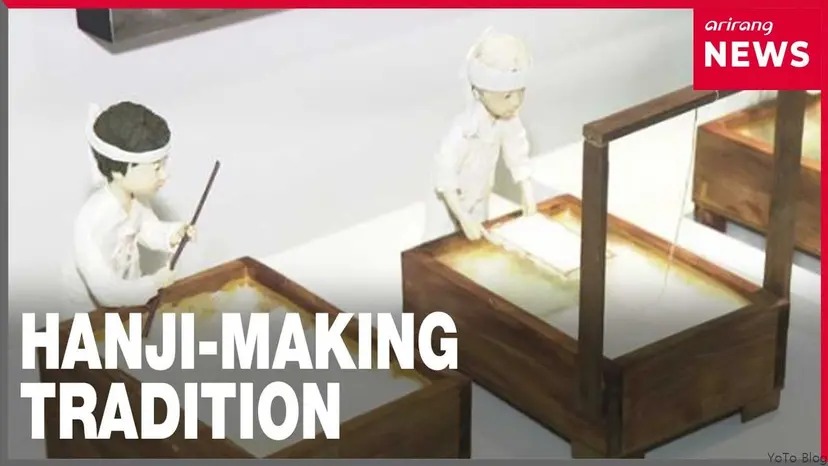
Korea's hanji-making tradition is set to be inscribed on UNESCO's Intangible Cultural Heritage list. The Korea Heritage Service said Thursday that traditional knowledge and skills related to hanji production and related cultural practices had been recommended for inscription.
Hanji is traditional Korean paper made from the inner bark of the paper mulberry, and its production embodies generations of artisans' knowledge and skills. If approved, the tradition will become Korea's 24th entry on the list.
The final decision will be made at the 21st session of the intergovernmental committee in Xiamen, China, from November 30 to December 5.
Seoul Metropolitan Opera revives La Boheme at Sejong Center

The Seoul Metropolitan Opera's production of La Boheme is returning to the stage for the first time in two years, running from Thursday through Sunday at the Sejong Center for the Performing Arts. Set in a Paris attic under Christmas lights, the opera tells the story of the poet Rodolfo and the seamstress Mimi.
A major hit in 2024, it was the only locally produced opera to rank among the top 10 classical performances in Korea's performing arts box office data. For the revival, the production team focused on refining musical details and the dynamics of the characters.
The book-inspired wooden library frames remain, while new large-scale puppets and more than 100 cast members add scale to the crowd scenes. Sopranos Hwang Su-mi and Park Hye-sang alternate as Mimi, each offering a different interpretation. A curtain that opens and closes like the pages of a book, along with lighting and projections, carries the storytelling.
BeautySum Korea Suwon opens with AI skin analysis and tailored experiences

BeautySum Korea Suwon 2026, a comprehensive beauty expo, opened Thursday at the Suwon Convention Center in Gyeonggi Province. Running through November 7, it covers skincare, makeup, inner beauty and the latest beauty technologies, serving both businesses and consumers.
AI-powered skin analysis and personalized beauty services are a highlight, letting visitors test products and solutions suited to their own skin. For industry professionals the expo offers a chance to find new consumers and potential partners, while shoppers can explore emerging trends and try products firsthand.
The event also connects Korean beauty companies with international buyers looking to enter overseas markets.