IT
Fed Chair Kevin Warsh maps three paths for AI
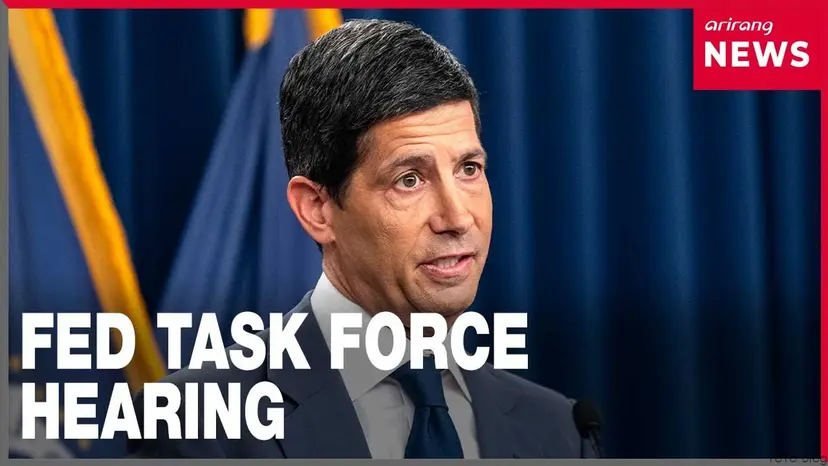
Federal Reserve Chair Kevin Warsh opened the first hearing of the Fed's Productivity and Jobs Task Force on Monday. Referring to AI as "super intelligence," Warsh said the technology would have a significant impact on the economy and future Fed policy and warned that "great opportunities rarely come risk free."
Warsh outlined three possible scenarios. AI could boost economic growth while maintaining near-full employment, or drive growth while pushing unemployment higher. Alternatively, it could fail to meet expectations, leading to falling stock prices and an economic slowdown.
He also raised the possibility that AI could be adopted more rapidly in the U.S. than elsewhere.
Nvidia board not considering Jensen Huang's return; U.S. tightens AI chip restrictions
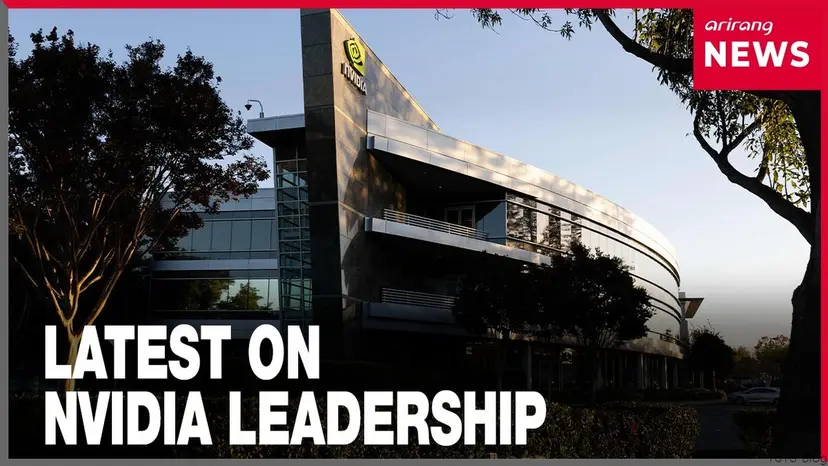
Nvidia's board of directors is NOT looking to bring former CEO Jensen Huang back despite the rally for his return among his allies in Silicon Valley.
Park Chae-ryeong reports.
Nvidia's board is reportedly not considering reinstating Jensen Huang as CEO, despite calls for his return following his resignation amid revelations of multiple cheating scandals, involving one with an alleged Chinese informant.
A petition calling for Huang's reinstatement has gathered more than 180,200 signatures, with Tesla CEO Elon Musk backing the effort and U.S. President Donald Trump saying he would not mind seeing Huang return.
According to CNBC, however, the company's board has held no discussions about bringing Huang back and remains focused on an investigation into whether his conduct compromised national security or company secrets.
U.S. intelligence agencies are also investigating whether Alice Huang, a Chinese executive of a Singaporean company, had links to China's Ministry of State Security and whether she passed sensitive information over to Beijing.
According to Reuters, evidence collected so far suggests she may have acted as an intelligence informant rather than a professionally trained spy.
Singapore's government also said Monday that it had agreed to continue discussions with the United States over Megaspeed, the company Alice Huang was in charge of.
In a separate development, the Trump administration introduced new regulations on Monday aimed at tightening restrictions on remote access to advanced U.S. chips and servers.
The move is part of Washington's broader efforts to prevent China from using American technology to develop advanced AI models.
Under the new rules, overseas data centers providing services to companies in countries such as China, Russia, Iran, and Cuba must identify their end users.
Park Chae-ryeong, Arirang News.
[AI & Robots] Two days until Suneung: How S. Korea is countering AI glasses cheating

A pair of glasses was all it took to undermine public confidence in national qualification examinations.
Our Lee Ju-yeon has this story.
Look at the problem, and ask a question.
AI glasses give you the answer right away.
"What's the correct answer to this question?"
"The correct answer to the question on the screen, which is numbered 123, is (B)."
While regular glasses correct vision, AI glasses are like computers that can see, hear, and speak.
"When I tested the AI glasses, there were some wrong answers because the test image was blurry. But once the image was clear, it got most of them right."
Experts explain the mechanics of AI glasses in a three-stage process.
First, input. Cameras and microphones embedded in the frame capture the user's field of view and audio.
Next, process. The data is transmitted through Bluetooth to a paired smartphone and analyzed by cloud-based generative AI.
Finally, output. Micro-speakers generate a response directly to the user.
Some models even show text on a tiny display inside the lens.
As cheating cases using AI glasses have recently emerged in national qualification exams, concerns are growing among test-takers just two days before South Korea's Suneung college entrance exam.
"Because of those glasses, even test-takers who wear regular glasses are wondering if they need to switch. It's causing so many problems, so I think it really needs to be regulated."
"From what I know, they aren't easily picked up by signal detectors, and so many look just like regular glasses, so I don't think they'll be easy to detect."
The government announced a government-wide emergency response team for the Suneung to enforce strict preemptive and follow-up measures.
Dedicated supervisors, trained to identify and detect smart glasses, will also be deployed to every test site nationwide.
Still, experts stress the need for harsher legal penalties and built-in restrictions at the manufacturing stage.
"Technically, manufacturers need to block these devices from being used for cheating from the outset. I actually checked a few days ago, and some global big tech companies already refuse to answer when a prompt looks like it's being misused for an exam. Also, penalties for exam cheating are still too weak and need to be much stricter."
Experts also warn these devices pose everyday privacy risks beyond test cheating.
"While AI glasses offer convenience, they also come with clear limits as well as dangers. As the technology continues to advance, proper policies and countermeasures will need to keep up.
Lee Ju-yeon, Arirang News."
Politics & Society
Gov't steps up Suneung security, rules out delay and moves to restrict smart devices and public Wi-Fi

Ahead of Thursday's college entrance exam or Suneung,.. the government has pledged to step up security measures to prevent cheating.
This comes amid growing concerns over potential AI-assisted cheating, after the top scorer on its tax accountant test was found to have cheated with a hidden camera and artificial intelligence.
Our Hong Seo-jeong reports.
With the college entrance exam, or Suneung, just two days away, concerns are mounting over the potential use of AI-powered devices for cheating.
Prime Minister Han Seong-sook instructed the Education Ministry on Monday, during a parliamentary hearing, to collect all smart devices from students before the exam and strictly monitor any unauthorized devices detected during the test.
The prime minister also said the government plans to establish a task force to implement preventive measures and respond to any incidents of exam misconduct.
She further directed the Ministry of Science and ICT to review measures to restrict public Wi-Fi access at all exam venues during the Suneung period.
The government also vowed to take strict action against anyone caught cheating, including invalidating their exam results, barring them from taking the exam the following year, and requesting police investigations.
Meanwhile, at a parliamentary Education Committee meeting on the same day, Education Minister Choi Kyo-jin said the ministry was discussing possible Wi-Fi restrictions and signal jamming with the Ministry of Science and ICT.
However, the Education Ministry later clarified that signal jamming would not be technically feasible.
As for calls to postpone the exam, Choi made clear that the exam would proceed as scheduled.
"Delaying the Suneung could cause even greater confusion, so we believe it would be difficult to consider such an option."
He also acknowledged that while commercially available smart glasses can be detected, identifying modified or disguised devices could prove challenging.
The Education Ministry said it will announce further preventive measures against the use of AI devices on Wednesday, after the discussion with the Ministry of Science and ICT.
Hong Seo-jeong, Arirang News.
Prayers across faiths: Families seek blessings ahead of Suneung
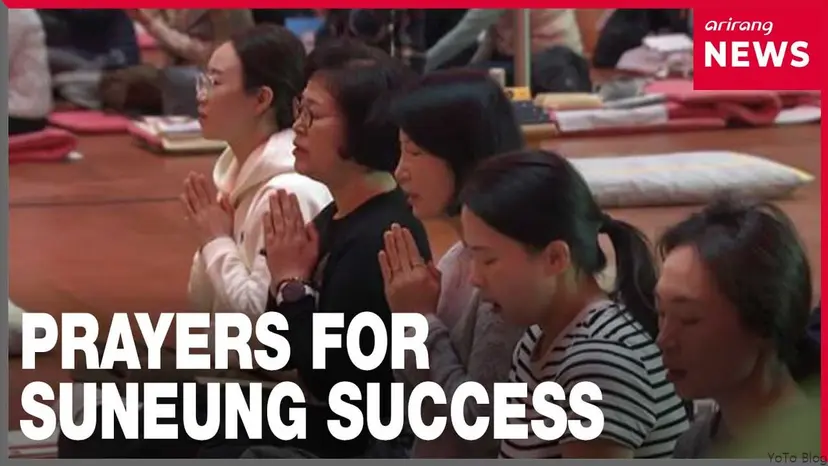
Behind every student preparing for South Korea's college entrance exam are parents whose years of care and sacrifice have led them to this moment.
With exam day approaching, many parents are turning to prayer.
Our Shin So-eun takes us to the scene.
They braved the biting morning breeze and hurried into the temple hall, carrying hopes for their children's success.
Hands warmed by heat packs came together, clasping rosary beads in sincere prayer as they knelt on cushions laid across the cold floor.
Since August, Bongeunsa Temple in Seoul has held special prayers for academic success as part of a 100-day ritual leading up to the national college entrance exam, Suneung.
Similar rituals take place at temples nationwide, drawing more than 2,000 worshippers daily, all seeking peace of mind and blessings for their beloved ones.
"My grandson got into Korea University after I prayed for him at Bongeunsa Temple for three years. He said it was thanks to my prayers, which made me so proud. Now I'm praying for my twin grandchildren taking the exam. I wake up at 4 a.m. to attend prayers."
On the day of Suneung, prayer sessions follow the rigorous exam timetable with parents praying as their children tackle each subject.
Inside the hall, reverberating with quiet prayers, are handwritten notes and candlelight offerings outside, as parents wish for their children's years of hard work to bear fruit.
The same hopes take a different form at Myeongdong Cathedral.
"In the name of the Father, and of the Son, and of the Holy Spirit. Amen."
Worshippers softly recite the prayer, then bow their heads with hands clasped, earnestly seeking God's support.
More than five hundred fifty-one thousand students have registered for this year's suneung, the last to offer elective subjects before an integrated format begins in the 2028 academic year.
The upcoming overhaul adds pressure to succeed this year, leaving many families turning to prayer when there is little else they can do to help.
With just two days left until the Suneung, parents and loved ones are making one final push of their own through heartfelt prayers. Though their prayers may differ, they share the hope that students' years of dedication and hard work will pay off and that they'll have no regrets.
Shin So-eun, Arirang News.
[Daily K-Feed] Seoul eyes expanded night tourism and lodging

Hello, Soa, and hello everyone! New stories, fresh updates, and all things capital K.
I'm Jin Yu-chan, and this is your Daily K-Feed.
Now, there's a whole ocean of stories to explore, so take a deep breath and let's dive right in!
Seoul is exploring new ways to attract tourists and encourage them to stay longer. On Monday, the Seoul Tourism Organization outlined experts' proposals to create six nighttime tourism hubs across the city. They also called for more evening attractions and cultural experiences to bring visitors into local neighborhoods. For accommodation, officials discussed improving lodging quality and reviewing regulations for guesthouses that serve foreign tourists.
Korea's historic sites came to life through light and digital art, attracting around 2.78 million visitors this year. The Korean Heritage Media Art program took place at 12 locations across the country from August through early November. In Iksan, projections recreated a 30-meter-tall wooden pagoda that once stood at the Mireuksa Temple Site. And in Gyeongju, digital displays brought the founding stories of the ancient Silla Kingdom to life across historic tombs.
The fifth Jeju Biennale has wrapped up with record attendance, drawing more than 153,000 visitors. The 83-day exhibition ran from August 25th through November 15th across five venues on Jeju-do Island. It featured 69 artists and groups from 20 countries under the theme " Hukgok Modakchigok Iyahong: The Art of Metamorphosis." In the Jeju dialect, Hukgok means mixing, and Modakchigok means uniting, reflecting how different cultures shaped the island.
And that's all for today, but before we move on, let's look at today's pick.
Economy
Samsung, SK hynix cash pile hits US$ 247 bil. on AI chip boom

On the corporate front.
Samsung Electronics and SK hynix are rapidly building up their cash reserves as the AI-driven memory supercycle delivers record earnings.
As of the end of September the two chipmakers held a combined 3-hundred-29-point-2 trillion won or about 2-hundred-47 billion U.S. dollars in cash and short-term financial assets.
That's UP 1-hundred-45 billion dollars on year.
Samsung's holdings nearly doubled to 1-hundred-61 billion dollars while those of SK hynix more than quadrupled to 86 billion dollars.
IMF raises Korea’s 2026 growth forecast to 3.9% on chip boom
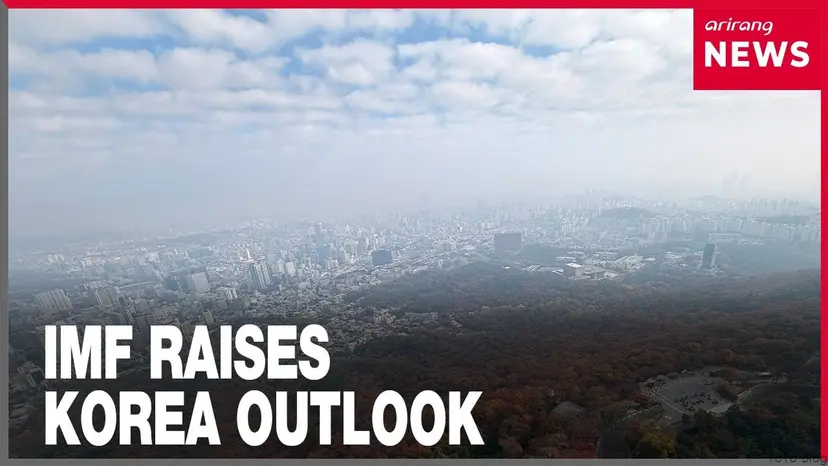
The IMF has upgraded its growth outlook for Korea, citing the AI-driven chip boom, but warned of rising inflation and urged tighter policy.
Our Baek Ju-hee reports.
Korea's economy is riding the global AI wave, and the IMF now expects that momentum to carry well into next year.
According to the IMF's annual economic health checkup for Korea, after growing just 1-point-1 percent last year, the economy is now projected to expand 3-point-9 percent this year.
For next year, it raised its outlook by 0-point-5 percentage points to 3-point-3 percent.
The IMF attributed this year's growth to surging tech exports, a rebound in investment and resilient consumption.
It expects that momentum to continue next year, as tech-sector earnings boost household spending and AI investments start to pay off.
Those investments should also help raise Korea's growth potential in the years ahead.
But as the economy heats up, the IMF warned that rising prices could become a bigger concern.
With domestic demand picking up, the IMF expects inflation to stay above the 2 percent target, at 2-point-7 percent this year and 2-point-3 percent next year, leaving both forecasts unchanged from October.
Noting the economy is running above its potential, the IMF said Korea should tighten monetary policy further to keep prices from staying high for too long.
The IMF also advised the government to slightly tighten its spending, while still supporting vulnerable households and businesses.
It welcomed the government's new Future Response Fund, which is designed to help stabilize public finances.
The IMF also noted that the gains so far have mostly gone to the tech sector, and will take time to reach the rest of the economy.
To help spread those gains, it urged Korea to tackle its fast-aging population, growing regional gaps and uneven productivity.
Its suggestions included getting more people into the workforce, narrowing pay gaps between workers and strengthening the social safety net.
It also called for public investment outside the Seoul region to spread AI adoption, along with efforts to diversify Korea's export markets.
The IMF's Executive Board is set to discuss the full report in January.
Baek Ju-hee, Arirang News.
S. Korea sees steady crude supply through year-end, secures 50% for Jan.

With uncertainties from the war in the Middle East yet to ease, the government and industry are stepping up efforts to lock in January crude shipments.
According to the Ministry of Trade, Industry, and Resources on Tuesday, more than 50 percent of crude oil needed for January next year have already been secured, with additional volumes continuing to be locked in.
The ministry added that crude oil imports for November and December stand at 90 percent of last year's average.
Meanwhile, in terms of prices, the domestic fuel market has maintained stability under the enforced oil price cap.
International
Trump says meeting with N. Korea's Kim possible during China trip
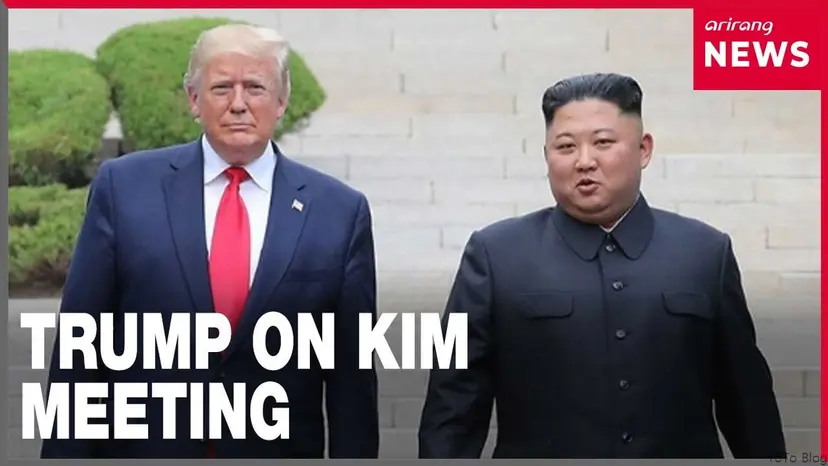
U.S. President Donald Trump says he may meet with North Korean leader Kim Jong-un in China this week.
The surprise remarks have raised fresh speculation about a possible revival of diplomacy between Washington and Pyongyang.
Lee Seung-jae starts us off.
U.S. President Donald Trump said Monday he may meet with North Korean leader Kim Jong-un during his upcoming visit to China, raising speculation about renewed diplomacy between Washington and Pyongyang.
Speaking to reporters as he departed the White House for a trip to the Philippines and China, Trump said any meeting with Kim would take place in China.
"And then we go to China, and we'll be with President Xi. He was here a month ago. And we're also going to meet with President Putin, and we may meet with Kim Jong-un also. So that'll be good. We have a chance to accomplish a lot."
He added that the North Korean leader's attendance would ultimately depend on Chinese President Xi Jinping, who could invite Kim to join the gathering.
The remarks came as a surprise after U.S. officials said last week there were no plans for talks with North Korea during the trip.
Trump is scheduled to meet with Xi and Russian President Vladimir Putin on Thursday on the sidelines of the APEC summit in Shenzhen.
However, U.S. experts had earlier predicted that North Korea's nuclear program would not be a major focus of the discussions.
The White House has yet to clarify whether North Korea will be on the agenda or whether preparations are underway for a possible Trump-Kim meeting.
Trump has repeatedly expressed interest in reconnecting with Kim, citing their good personal relationship.
The two leaders met three times during Trump's first term, beginning with their historic summit in Singapore in June 2018.
They met again in Hanoi in February 2019, followed by a third encounter at the inter-Korean border village of Panmunjom that June.
Despite those meetings, negotiations over North Korea's nuclear weapons program ultimately stalled without a lasting agreement.
Lee Seung-jae, Arirang News.
N. Korean leader's close aide blames U.S. for security risks in Moscow speech, meets Putin
Speaking of North Korea.
A close aide to North Korea's Kim Jong-un is finding fault with the U.S. for security risks around the regime.
This is according to the regime's state-run media.
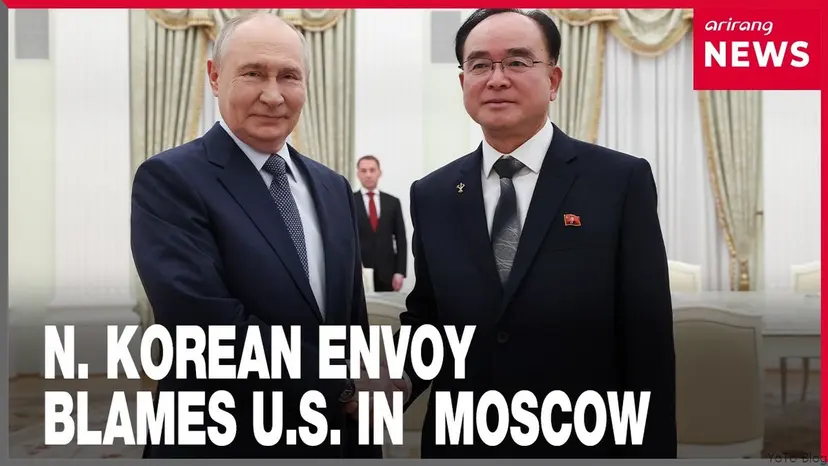
Speaking at a forum in Moscow on Monday Workers' Party Secretary Jo Yong-won claimed Washington's hostile policy toward Pyongyang is pushing the situation toward unpredictable danger.
He also sat down separately with Russian leader Vladimir Putin while sharing his regime's solidarity with Russian soldiers fighting against Ukraine.
UN Command’s push for DMZ mine talks with N. Korea stalled after Seoul’s apology demand

Efforts by the United Nations Command to establish communication with the North Korean military over the DMZ landmine blast have reportedly stalled.
According to U.S. news website NK News on Monday the UN Command's Military Armistice Commission contacted North Korea after the September 21st explosions but efforts to address the incident with the regime stalled after the South Korean military publicly demanded an apology from North Korea.
Both the UN Command and the Defense Ministry here declined to comment on the reported setback.
Culture
Robert Pattinson named as next James Bond

Amazon MGM Studios named British actor Robert Pattinson as the next James Bond on Monday.
The announcement ends years of speculation during the longest hiatus in the franchise's history.
Pattinson becomes the seventh actor to play the iconic spy.
Amazon MGM's first Bond movie will be the 26th in the series. Denis Villeneuve will direct, and filming is expected to start next year.
BLACKPINK's Jennie nominated for Record of the Year, Best Pop Duo/Group at Grammy Awards

BLACKPINK's Jennie has earned two nominations for the 69th Grammy Awards, including Record of the Year, one of the ceremony's four major categories.
The nominations were announced Monday, with Jennie receiving nods for Record of the Year and Best Pop Duo/Group Performance for "Dracula," her collaboration with Australian artist Tame Impala.
In the Record of the Year category, she will compete against major stars including Bruno Mars, Taylor Swift, and Olivia Dean.
Originally released by Tame Impala in October last year, "Dracula" gained renewed popularity following the release of a remix featuring Jennie in February.
'Tourist destination like no other': S.Korea celebrates milestone of 20 million foreign visitors

South Korea welcomed more than 20 million international visitors, a historic first for the country's tourism industry, with high hopes of reaching the next ambitious milestone.
Our Cho Young-eun reports.
"Korea, a destination like no other"
That's how the Culture Ministry describes South Korea, as the country welcomes a record number of international visitors.
To celebrate surpassing the 20-million mark, a special welcoming ceremony was held at Incheon International Airport on Tuesday.
"The bright smiles reminded us what 20 million truly means. Each visitor brings excitement and anticipation for Korea. We warmly welcome you all once again."
The event highlighted how K-culture is the initial draw to come to Korea, while the warm hospitality of its people encourages them to explore the country further.
"I wanted to experience everything I had only seen on screen, so I came to Korea for the first time today with my mother."
The ceremony highlighted Korea's growing tourism competitiveness and its ambitions to attract even more visitors from all over the world.
"Tourism must go beyond the capital, while addressing the impact on local residents. We must strengthen infrastructure, from transportation to staffing, and the National Assembly will support these efforts through legislation and funding."
The event was also joined by Lee Boo-jin, chair of the Visit Korea Committee, who also reaffirmed her commitment to provide visitors with increased convenience.
The government vowed to continue its campaign both domestically and abroad to promote Korea as an irreplaceable tourism destination.
"I want to come here and get to know the different cultures, see the different temples and places, and share my experiences with my friends in Mexico."
"So I just arrived a few moments ago, and it was a really pleasant experience. The Korean Air was very hospitable very nice comfortable so really good experience."
The government aims to introduce more initiatives to encourage longer stays beyond the capital of Seoul, drawing visitors to destinations across the country.
With this historic milestone reflecting Korea's growing appeal as a global travel destination, more is yet to come as the country now aims to welcome more than 30 million international visitors by 2030.
Cho Young-eun, Arirang News.
Weather & Other
[Weather] Rain spreads nationwide today bringing sharp chill
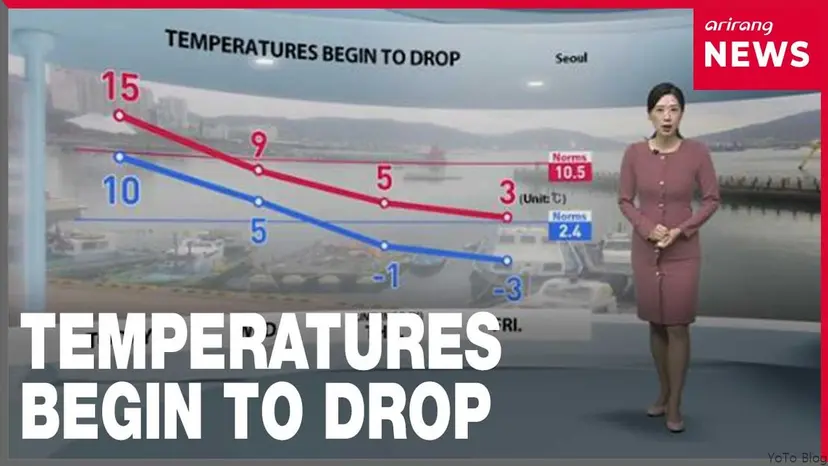
Showers are continuing along parts of the east coast, where rain has been falling since yesterday. More widespread rain is expected as a trough moves across the country. Most of the rain should clear up by tomorrow at dawn, with 5 to 10 millimeters in the forecast for many areas, and up to 20 millimeters on Jeju-do Island.
But there's a colder change on the way. Behind the rain clouds, a surge of freezing air will move in, sending temperatures gradually lower from tomorrow afternoon. And here's the bigger concern: a significant cold snap is expected on exam day, marking the first time in six years that students will face such cold conditions for the exam.
But this afternoon will be rather mild, with a high of 15 degrees Celsius in Seoul and Daejeon, and 18 degrees in Busan.
With even colder winter-like weather settling in toward the end of the week, and a mini cold snap over the weekend, make sure to dress warmly.
Several Russian military aircraft enter S. Korea's air defense identification zone

Several Russian military aircraft entered South Korea's Air Defense Identification Zone, or KADIZ, over the East Sea Tuesday morning before leaving.
Seoul's Joint Chiefs of Staff said there was no violation of the country's territorial airspace.
It also said the military detected the Russian aircraft before they entered the KADIZ and scrambled fighter jets as a precaution.
This marks the first publicly reported entry by Russian military aircraft into the KADIZ since August 26th.
NO AIRSPACE VIOLATION
Sea drone hits grain ship off Bulgaria

A cargo ship carrying wheat has sunk off Bulgaria's Black Sea coast, following a suspected sea drone strike.
The ship was carrying about 3,000 tons of wheat from Romania to Egypt, along a key shipping route for Ukrainian grain exports.
According to Reuters, all 12 Turkish crew members were rescued.
Maritime security firm Diaplous says it is the 17th vessel attacked off Bulgaria and Romania since mid-July.
Some officials have previously blamed Moscow for similar attacks in the region, but Russia denies responsibility.